
Feeling Overwhelmed? Here's How to Take Back Control
Published: 10 July 2026 (updated 19/09/2026)
Free Resource added: 30 September 2026
Have you ever felt like there is just too much to do? Your mind is racing, your to-do list keeps growing, and you feel exhausted before you've even started the day. The more you think about everything you ‘should’ do, the harder it becomes to do anything at all.
I’ve been feeling this lately, and noticed my friends have been as well. As a result, I thought I would explore the topic, and find some simple ways we can overcome it. (After all, simple tricks and tools to help us is exactly what we need right now – nothing too complicated.)
Keep reading for practical tools to get you going again.
Simple Ways to Overcome Overwhelm Every Day
Overwhelm is something almost everyone experiences at some point. Whether it comes from work, family, finances, health, relationships, or trying to juggle too many responsibilities, overwhelm can leave you feeling stuck, anxious, and unsure where to begin.
This article is designed to help you move forward, through the overwhelm – one simple, practical step at a time – so you stay in control. (Because let's face it, nobody likes to feel overwhelmed, and out of control.)
With a few simple steps, you can quiet your mind, regain clarity, and move forward, one small step at a time.
What Is Overwhelm?
Overwhelm happens when your brain believes there are more demands than you can handle.
You may feel like:
Everything is urgent.
You don't know where to start.
You're constantly behind.
You can't switch off.
You're emotionally drained.
Small tasks suddenly feel huge.
You're afraid of making the wrong decision.
When this happens, your nervous system can move into stress mode. Instead of thinking clearly, your brain focuses on surviving. The fight, flight, or freeze mode can kick in, and your body is flooded with stress hormones, such as cortisone and adrenaline. While these are helpful in an emergency (you can run away if required), they’re not helpful in day-to-day life when you’re not in danger. It’s the survival mode (and the hormones) which contribute to the feeling that even simple decisions suddenly feel too hard.
When this happens, it’s important to remember that feeling overwhelmed is a feeling.
This article discusses simple and practical ways you can move through the feeling, and into small actions that you can do. After all, Rome wasn’t built in a day – and chances are, most of the items on your list can wait for a bit (or be delegated, or even not done at all).
Why We Become Overwhelmed
There are many reasons people experience overwhelm. (And yes, I’ve felt all of these! Lately, I've been unpacking the last of my boxes - and there doesn't seem to be enough space, which means I have lots of decisions to make, and sometimes it all just seems to be too hard - which means I just ignore them for longer than I ideally would.)
Some common causes include:
Trying to do everything perfectly.
Taking on too many responsibilities.
Saying yes when you really want to say no.
Comparing yourself to others.
Constant interruptions.
Lack of rest.
Big life changes.
Financial pressure.
Uncertainty about the future.
Ignoring your own needs for too long.
Sometimes overwhelm builds slowly over weeks or months without us even noticing. Other times, it may come on more suddenly (eg. you start a new job, or decide to build a new house, and/or expand your family). Regardless of how long it takes, it is still a valid feeling.
Signs You May Be Overwhelmed
Your body and mind usually give you clues, such as the ones mentioned below. You may feel one of these, or a combination – or even all of them. (This may also depend on the amount of overwhelm, and how long you’ve felt it, too.)
Feeling anxious or stressed
Brain fog
Difficulty concentrating
Poor sleep
Feeling emotional
Procrastination
Snapping at people you care about
Constant worry
Lack of motivation
Feeling frozen or unable to decide
Recognising these signs early gives you the chance to respond with kindness, instead of pushing yourself even harder.
Why Fighting Overwhelm Usually Doesn't Work
Many people respond to overwhelm by trying to work faster. While on occasion I’ve had this work, often it makes things worse. When we're overwhelmed, our brain already feels overloaded.
Adding more time pressure often leads to:
More mistakes
Increased stress
Lower energy
Burnout
Less enjoyment of life
Instead of pushing harder, what usually helps is slowing down enough to regain clarity. Take a step back, and consider what can be done. There may be other options that you haven’t considered at first glance, such as delegating, or
delaying certain aspects.
Sometimes slowing down is actually the fastest way forward.
12 Practical Ways to Overcome Overwhelm
1. Pause Before Doing Anything
When everything feels urgent, give yourself permission to stop for a few minutes.
Take several slow breaths (with your eyes closed if possible, so you don't get overwhelmed with everything in front of you). This helps to slow your nervous system, and allow your body, and mind to settle. It helps to reduce the stress hormones (cortisol and adrenaline) and allows the brain to re-engage more calmly.
Then ask yourself: ‘What do I need most right now?’ Perhaps there’s a logical order that if you rush in, you might not have seen. Perhaps there is another option you hadn’t thought of at first glance.
Even a two-minute pause can help settle your mind, and allow additional options to come up (eg. asking for an extension, or trading time/energy/resources with someone else).
2. Empty Your Mind Onto Paper
Instead of keeping everything inside your head, write it all down. Include the following items:
Tasks
Worries
Ideas
Appointments
Things you're trying to remember
Once everything is on paper, your brain no longer has to work so hard holding onto it all.
I’ve done this many times, and immediately feel lighter. It lightens the load on your brain, which then frees up space for brainstorming ways to manage everything (or help you decide what to let go, or make the decision to delegate or delay something).
Meditation (including guided meditation) is another great way to empty your mind. Many people find guided meditation easier to focus on, as you follow the voice and prompts, so if you'd like to explore that more, our article The Power of Guided Meditation: Your Path to Peace and Calm, can help.
3. Choose Just One Small Step
One of the biggest mistakes people make is trying to solve everything today.
It is helpful to ask yourself: ‘What is the next smallest step I can take?’
This could take many forms, such as the ones below.
Replying to one email.
Folding one basket of washing.
Making one phone call.
Booking one appointment.
As you know, small steps create momentum. In turn, momentum creates confidence. And confidence makes bigger tasks feel easier.
So work out one small step you can take for one of the items you wish to do. (And if you struggle with procrastination, use the 5 Second Rule by Mel Robbins - count from 5 to 1, and then just do it, without allowing any additional thoughts in. Mel changed her life using this rule, which helped her to do all the things she didn't feel like doing - and she received thousands of emails from people who also thanked her for changing their lives, too.)
Mel Robbins changed her life (and you can too) by 'learning how to push yourself to take action when you are afraid or full of self-doubt or overwhelmed with excuses is a life skill you can learn. Once you master it, you'll understand that you can achieve anything through small, consistent moves forward.'
page 7, The Let Them Theory by Mel Robbins, 2026, McPherson's Printing Group, Hay House Australia Publishing Pty Ltd.
4. Stop Trying to Be Perfect
I have definitely been guilty of this one!
Perfection creates pressure - as well as the reluctance to try, because what if you’re not perfect?
If you instead focus on progress – this creates freedom. Freedom to do one small step at a time. One small action at a time.
Ask yourself: ‘Does this really need to be perfect?’
And if you think the answer is ‘yes’, ask again. Or better yet, ask someone else. I’ve found the answer is usually ‘good enough’ is more than enough. (And yes, it took me a number of years to feel comfortable with this. However, starting your own business, and listening to all my successful business mentors - they all say the same thing - 'done is better than perfect.')
5. Focus on What You Can Control
We waste enormous amounts of energy worrying about things outside our control. (For example, what if someone doesn’t like or respect me? What if people don’t like the same things that I like? What if I’m not wearing the ‘right’ clothes?)
Instead, shift your attention toward what you can influence today. For example, it’s helpful to have some general topics of conversation in mind to explore when meeting new people, to see what you do have in common; you could also check out what other people are wearing beforehand (or wear something that you’re comfortable in regardless of what others are wearing.
This is something that I’ve learned over time – focus on what you can control, and let go of the rest.
Even one positive action is more powerful than hours of worrying.
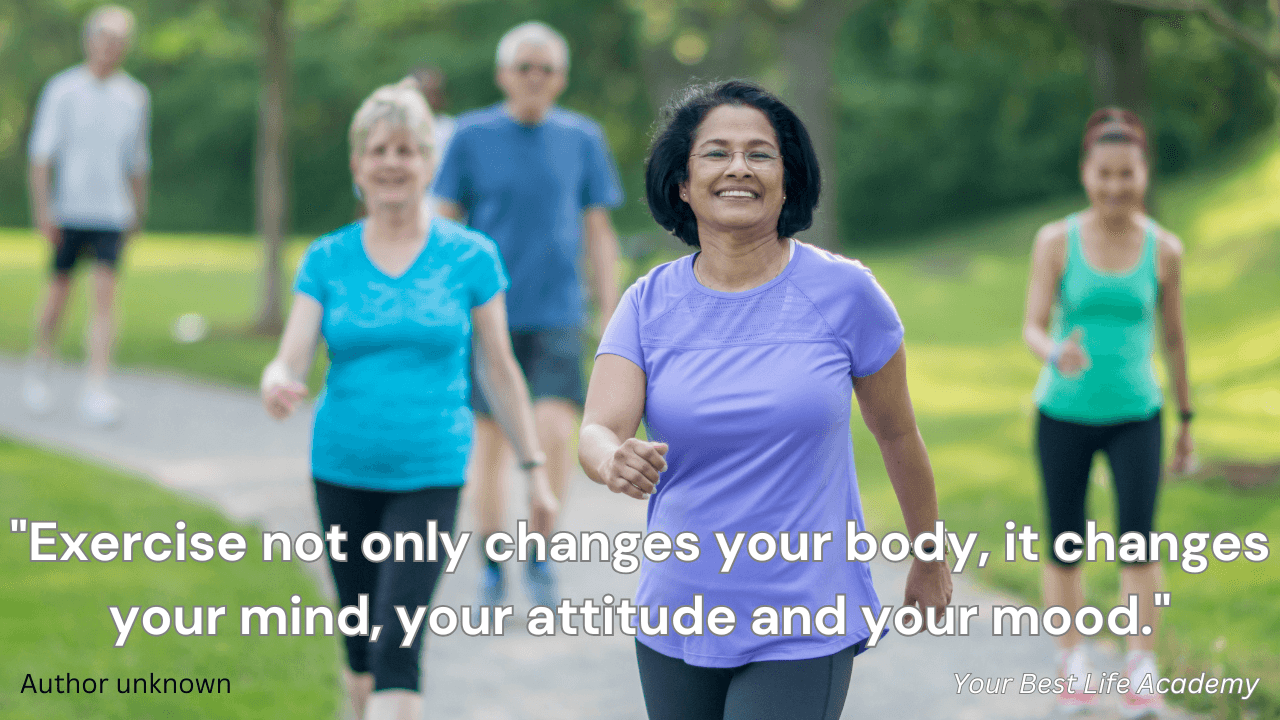
6. Take Care of Your Body
When you're overwhelmed, basic self-care often disappears first. (‘I don’t have time for that walk/run’; or ‘a 2-minute shower instead of a relaxing bubble bath will have to do.’)
Yet the following simple self-care habits can make a huge difference.
Drink water.
Eat nourishing food.
Move your body.
Stretch.
Go for a walk.
Get enough sleep.
I find going to the gym, or a walk in nature, helps me with perspective and motivation.
Your mind works better (and your soul feel happier) when your body feels rested, nourished, and supported. (And if you struggle with this, our article How to Find the Perfect Balance Between Rest and Productivity provides some great tips to help.)
7. Reduce the Noise
Modern life is full of distractions. Most people get notifications, emails, and look at social media, and the news. There is usually constant information coming at them – far more than at any other time in history.
This is tiring, and distracting. We don’t have the time or the energy to focus on (or even think about) what really matters to us.
And while there might be peer pressure to ‘keep up with the Joneses’ – is that really in your best interest? Do you want to spend your life staring at a screen, rather than going outside, and really getting into something that you love, like dancing, running, or yoga? Or even catching up with a close friend or two, perhaps going for a walk in nature, or catching up over a meal?
There’s a difference between having information thrown at you at the speed of knots, and catching up with loved ones, and deepening a connection you already have (while making memories of good times that you can look back on, and enjoy time and again).
Give yourself permission to disconnect for a while. A chance to really consider what you want your life to look like. A chance to unwind, and just ‘be’ for a bit.
A quieter environment often creates a calmer mind. And yes, even 15 minutes is worthwhile. And if you can’t do that often, see if you can ignore all electronic distractions for an hour or two every day. You can tell people you’re unable to chat at this time, and just focus on one or two items at a time – or even work out your priorities, and delegate/delay items. A little perspective (even just a 5 minute walk around the block, or staring at the stars, or into the ocean for a bit) can do wonders for your mindset, and help you reduce the feeling of overwhelm.
8. Check Your Values
Sometimes overwhelm comes from spending your time on things that don't truly matter to you. For example, if you’re working on a job, and you don’t feel your values align with those of the company, your managers, or your co-workers, this can bring up feelings that you may try to suppress, for the sake of keeping the job, and the money coming in.
I’ve definitely worked in roles where my values didn’t align with those of the companies for whom I worked, and I really struggled with some of the instructions I was given.
There are a few questions you can ask yourself in this situation.
What matters most right now?
Does this task align with my values?
Am I saying yes to things that should really be a no?
And if you do find that your values do not align with where you are working (or any other situation), this raises the awareness within you. Once you have the awareness, you can do something about it (eg. look for a new job, or new friends, or a new living arrangement). And yes, it can be difficult – but it is SO worth it on the other side.
Living in alignment with your values often makes decisions much easier.
And if you'd like to explore personal values more, our free online mini-course, The Values Code: Unlocking Your Best Self, can help.

9. Ask for Help
Despite what you (or society) may think, you don't have to carry everything alone. It can be healthy (for you, and for others) to ask for help. It can help you, in that you can talk it out, and perhaps delegate, delay, or don’t do some tasks. It helps with relationships, in that others feel you trust them, and are willing to share that you feel you need a little help sometimes.
Support might come from:
Family
Friends
A coach
A mentor
A counsellor
A trusted colleague
I've had a flatmate help me when I'm stuck with unpacking. I'd filled the space already, and needed some inspiration and guidance on what should be kept (in a box in a cupboard), what could be rearranged and used, and what should be donated to a charity shop. This really helped - it kept me focused, and I got their input on what to keep, what to use, and what to donate. It was very helpful.
And please remembers: asking for help isn't weakness, it’s wisdom. Knowing that you can’t take on the world alone, and not burning out trying to do the impossible. Knowing that the best thing you can do for yourself is to look after yourself – after all, you know that others depend on you, so keeping yourself healthy is important. It’s also knowing that others are often happy to help you – or talk you through some options you may not have considered. Being a martyr is not helpful – to yourself, or to others. Give them an example of someone giving themselves some grace, and living in a healthy manner, rather than burning themselves out.
10. Celebrate Small Wins
Many people only celebrate when everything is finished. (I think western society often encourages this.)
Having said that, I agree that it’s great to celebrate the end of something. However, it’s also helpful to celebrate as you go. Give yourself some incentive to keep going. Keep yourself fresh, with new energy at the end every step.
Each completed task is proof that you're moving forward. So give yourself a high-five, or a bubble bath with some music, or a meal out, or a nice massage. Something that makes you feel good, is appropriate to the step/s taken, and doesn’t break the bank (i.e. no, you can’t take an overseas holiday at the end of each and every task that you do)! (Well, unless you can afford it, and your small steps are each important and significant!)
Small wins build motivation, and encourage you to keep going, when you have bad days.
11. Be Kind to Yourself
Notice your inner voice. Would you speak to a friend the way you speak to yourself? Probably not.
Replace criticism with compassion.
Try saying: ‘I'm doing the best I can today.’
Those few words can completely change your mindset.
Give yourself some grace, love, and support, and see the difference. (And yes, I’ve done this for years. And it takes practice. But trust me, although it sounds simple, it does make a difference! And you feel so much better when you’re not being mean to yourself.) And if you do find yourself getting mad at yourself, our article Handle Conflict Gracefully - Simple Tools That Work is a great resource to help with this.
12. Remember That This Season Will Pass
Overwhelm often feels permanent when you're in it. You may wonder if it will ever pass - it should (especially if you take some of the steps outlined above). (Having said that, I'm talking about the occasional overwhelm, not something that it is so big and/or heavy that you may need to consider professional help - which may be incredibly useful, depending on your circumstances.)
Life constantly changes. Challenges come and go. You learn, and you grow.
You have overcome difficult seasons before. Have confidence that you can do it again.
A Simple Daily Reset
If you feel your overwhelm has been hanging around a bit, and you need something right now, try this simple daily reset.
If you feel your overwhelm has been hanging around a bit, and you need something right now, try this simple daily reset.
In the mornings, or whenever overwhelm starts building, try this five-minute reset:
Take five slow breaths.
Drink a glass of water.
Write down everything on your mind.
Circle your most important task.
Complete that one task before moving on.
That's it. Simple often works better than complicated.
Overcoming Overwhelm Is About Progress, Not Perfection
Many people believe they need to completely organise their life before they can feel calm. There is a way around this.
You can work on the clam first. When you’re calm, you can then focus on clarity. Once you are clear about what your priorities are, you can take action. Then take the next action. That is progress.
And you don't need to solve your entire future today. You can start with one or two goals – or even just areas you want to improve.
Once you have that, you only need to take the next step.
Little by little, those small steps become big changes.
Final Thoughts
Overwhelm can make you feel like you're standing at the bottom of a mountain with no idea how you'll ever reach the top.
However, every mountain is climbed one step at a time. Give yourself permission to slow down. Focus on what truly matters.
Take one small action today. (That could even be making a list of your priorities, or general goals or areas you want to work on. It could even be that you focus on one goal, and break it down into smaller steps.)
Trust that every step forward is moving you closer to a calmer, more balanced, and more fulfilling life.
Remember, living your Best Life isn't about doing more. It's about doing what matters most, with intention, kindness, and courage.
You are far more capable than the feeling of overwhelm leads you to believe.
🙋 Frequently Asked Questions
1. What is overwhelm?
Overwhelm is the feeling that you have too much to do, or too much to deal with all at once. It can make you feel stressed, anxious, exhausted, or stuck. When you're overwhelmed, it can be hard to think clearly or know where to begin.
2. Why do I feel overwhelmed all the time?
There are many reasons you may be feeling overwhelmed. You might be trying to do too much, taking care of everyone else before yourself, dealing with a big life change, or putting too much pressure on yourself. Sometimes overwhelm builds slowly over time without you even noticing. Taking regular breaks, setting healthy boundaries, and asking for help can make a big difference.
3. How can I overcome overwhelm quickly?
While there isn't a magic fix, there are simple ways to calm your mind. Try taking a few slow breaths, writing down everything that's on your mind, choosing just one small task to complete, or going for a short walk. These small actions can help you feel calmer, and more in control.
4. Why do small tasks feel so difficult when I'm overwhelmed?
When your brain is under stress, it can struggle to organise thoughts and make decisions. Even easy tasks can feel much bigger than they really are. Breaking tasks into very small steps helps your brain feel less overloaded, and makes it easier to get started.
5. Can perfectionism make overwhelm worse?
Yes, it can. Wanting everything to be perfect often creates extra pressure, and makes it harder to begin. Remind yourself that progress is more important than perfection (and yes, I understand that this can be easier said than done – but I’m living proof you can do it). Finishing something that's ‘good enough’ is often much more helpful than waiting for it to be perfect (and often never getting there).
6. How do I stop feeling overwhelmed by my to-do list?
Start by writing everything down so it isn't all staying in your mind. Then decide which tasks are most important, and which can wait. Focus on completing one task at a time instead of trying to do everything at once.
7. How do my values help me overcome overwhelm?
Your values can help you decide what really deserves your time and energy. When you understand what matters most to you, it's easier to say yes to the right things, and no to things that don't align with the life you want to create. (Our free mini-course The Values Code: Unlocking Your Best Self can help you understand and explore your values, so you can use them to help you live your Best Life.)
8. What if I don't know where to start?
Start with the smallest possible step. If cleaning the whole house feels overwhelming, tidy one room. If that still feels too much, tidy one corner, or one drawer. Taking one small step creates momentum, and often makes the next step easier.
9. Should I ask for help when I'm feeling overwhelmed?
Yes, absolutely. You don't have to carry everything on your own. Talking with a trusted friend, family member, coach, or counsellor can give you support, fresh ideas, and encouragement. Asking for help is a sign of strength, not weakness.
10. Can self-care really help reduce overwhelm?
Yes, it really can. Looking after your body and mind gives you more energy to handle life's challenges. Drinking enough water, eating nourishing food, getting enough sleep, moving your body, spending time in nature, and taking moments to rest can all help reduce stress and improve your ability to cope. (Exercising can often give you perspective, and new ideas, as well, which are both helpful when really overwhelmed.)
11. What should I do if overwhelm keeps coming back?
Recurring overwhelm is often a sign that something needs to change. You may need stronger boundaries, more rest, fewer commitments, or a better balance between work and personal life. Regularly checking in with yourself, and making small adjustments, can help stop overwhelm from building again.
12. How long does it take to overcome overwhelm?
Everyone's journey is different. Some people feel calmer after just a few minutes of slowing down and focusing on one task. Bigger or long-term challenges may take more time. The important thing is to keep taking small, consistent steps. Every positive choice you make helps you move closer to feeling calm, clear, and back in control.
13. Can mindfulness or meditation help with overwhelm?
Many people find that mindfulness and meditation help quiet a busy mind and reduce stress. Even spending five or ten minutes focusing on your breathing or sitting quietly can help you feel more grounded. The goal isn't to stop your thoughts completely, but to notice them without letting them take over. (For more on how mindfulness and meditation can help you, see my blogs Mindfulness Made Simple: How to Be More Present in Your Everyday Life, Meditation for the Soul: A Simple Path to Inner Peace, and The Power of Guided Meditation: Your Path to Peace and Calm.)
14. What is the most important thing to remember when I'm feeling overwhelmed?
Remember that you don't have to solve everything today. Focus on what you can do right now, not everything that still needs to be done. Be kind to yourself, celebrate small wins, and trust that each small step is moving you towards a calmer, more balanced, and more fulfilling life.
📚 Additional Resources
We have a couple of free 7-Day Challenges to help.
The first free Challenge is our People Pleasing Challenge - because if you're saying yes when you could be saying no, you can reduce your overwhelm this way.
Our second free 7-day Challenge is our our Meditation for Beginners 7-Day Challenge - because sometimes it helps to take a few minutes to unwind, give your mind a break, and allow your body (and nervous system) to reset. This could be a great one to do with a friend, so you can encourage each other to keep going, and relax and re-balance together.
Or perhaps you'd like to explore your values more, so you can determine exactly where the stress is coming from (eg. your values may not align with those of someone you are working or living with), our free mini-course can help: The Values Code: Unlocking Your Best Self.
If you're feeling a bit stressed, and our Stress Release Journal helps you go within, so you can help work out how to manage it as best as possible. Even a few minutes a day, reflecting on what worked (and didn't) and why, and how it can be managed better next time, can help.
Want more practical ideas and thought-provoking content on a regular basis? Don’t miss out on all the hints & tips that you can implement over time! Sign up for weekly input to help you uplift your life – one week at a time!
We have also created stand-alone pages in the 7 life segments with all blogs, freebies, and paid products grouped together, so you can easily find and review items of interest to you. Click on the links below to find the areas of most interest to you!
Life Purpose & Best Life - Health & Wellness - Relationships - Abundance - Personal Growth - Peace of Mind - Spirituality & Energy.
📝 Disclaimer
This blog post is for general information and educational purposes only. It is designed to share practical ideas and encourage personal growth, but it is not medical, psychological, mental health, or professional advice.
Everyone's situation is different, so what works for one person may not work for another. Please use your own judgement, and choose the ideas that feel right for you, and your circumstances.
If feelings of overwhelm, stress, anxiety, or emotional distress are becoming severe, lasting, or affecting your daily life, please seek support from a qualified healthcare professional or mental health provider. Reaching out for help is a positive step, and you don't have to face difficult times alone.
While every effort has been made to provide accurate and helpful information, Your Best Life Academy accepts no responsibility for any loss, damage, or outcomes resulting from the use of this information. By reading this blog post, you accept full responsibility for your own decisions and actions.
Always listen to your body, trust your intuition, and take one small step at a time. Every positive step you take is moving you closer to living your Best Life.
Your Best Life Newsletter
Your Weekly Dose of Inspiration to Live Your Best Life!
✔️ Get practical tips to feel happier, healthier, and more fulfilled.
✔️ Discover easy ways to bring more joy and purpose into your life.
✔️ Be the first to know about new blogs, free resources, and special offers.
💌 Join our supportive community today — it's free!
© 2025 Your Best Life Academy