
The Wim Hof Breathing Method for Stress and Mental Clarity
Published: 7 March 2026
Updated: 14 July 2026
If you have been feeling stressed, tired, or overwhelmed, your breath can be a simple way to reset your mind and body. I'm currently practicing the The Wim Hof Breathing Method, which is a powerful yet easy breathing practice created by Wim Hof. Many people use this method to calm their mind, boost their energy, and reconnect with themselves in just a few minutes.
In this article, you will learn what the Wim Hof breathing method is, how it works, and how this simple breathwork practice can help you feel clearer, stronger, and more balanced in everyday life.
A Breathing Method?
Breathing methods, while they might sound funny — in that everyone breathes every day — are a great tool to add to your well-being toolbox. With so many stressful world events, and pressures from everyday life, many people feel stressed, tired, and overwhelmed. Breathing techniques are simple tools that help the body and mind reset — and are free, and readily accessible for most people.
One practice that a few people mentioned to me over the years as being beneficial is the Wim Hof Breathing Method. Created by Wim Hof — often called ‘The Iceman’ — this breathing technique is designed to help you feel calmer, clearer, and more energised. It is also simple to learn, takes only a few minutes, and can be done almost anywhere. This article discusses this breathing method, the benefits of doing it regularly, and my own experiences with it.
What Is the Wim Hof Breathing Method?
During my yoga teacher training, pranayama (or the ancient yogic practice of controlling and extending breath to enhance life energy, improve mental focus, and reduce stress) was practiced regularly. Yoga has a number of different breathing techniques, which are very effective, and the beneficial effects are the subject of a number of studies (see link at the end for more on this). So I am aware of various breathing techniques, and how beneficial they can be.
Recently I discovered my new flatmate has been practicing the Wim Hof Breathing Method pretty much daily for the past few years. He swears by it, so I thought I’d give it a try as well. (Pranayama was on my list of things to do regularly once I moved out into a bigger house anyway.)
The Wim Hof Breathing Method is a guided breathing practice that involves three main parts.
Deep rhythmic breathing
Breath retention (holding the breath)
A recovery breath
These steps are repeated in several rounds. (My flatmate and I do the 12 minute session, which includes 3 rounds per session – and we usually play the recording 3 times in a row.)
The breathing pattern helps increase oxygen levels in the body, and shifts how the nervous system responds to stress. I was also taught (in my various yoga teacher trainings) that deep breathing helps release any old hormones and stuck energy in the system, so it’s a great practice to do first thing in the morning, before eating if possible.
The Wim Hof Breathing recording is readily available for free on YouTube, as well as Spotify. The breathing method is one part of the broader Wim Hof Method, which also includes cold exposure, and mindset training.
Many people use the breathing practice on its own to feel calmer, more focused, and more connected to their body.
Why Many People Feel Drawn to Breathwork
Breathing is something we do all day, without thinking. Yet when we change how we breathe, it can have a powerful effect on our body and emotions.
Modern life is distinctly different from older times, and older generations. We are surrounded by electronics, and wi-fi and microwave signals more than ever before. Some people spend more time playing electronic games than they do anything else. Some people experience separation anxiety if they are away from their phone, and instant updates about what’s happening in the world. All of these contribute to the fact that many people today experience:
Stress and anxiety
Mental overwhelm
Low energy or fatigue
Trouble focusing
Feeling disconnected from themselves
Breathwork practices (including the Wim Hof method) give people a simple way to pause, reset, and reconnect with their body.
Even a short breathing session can help you feel more grounded and present. And scientists are now studying this, to gather more data around the intricacies, including the benefits.
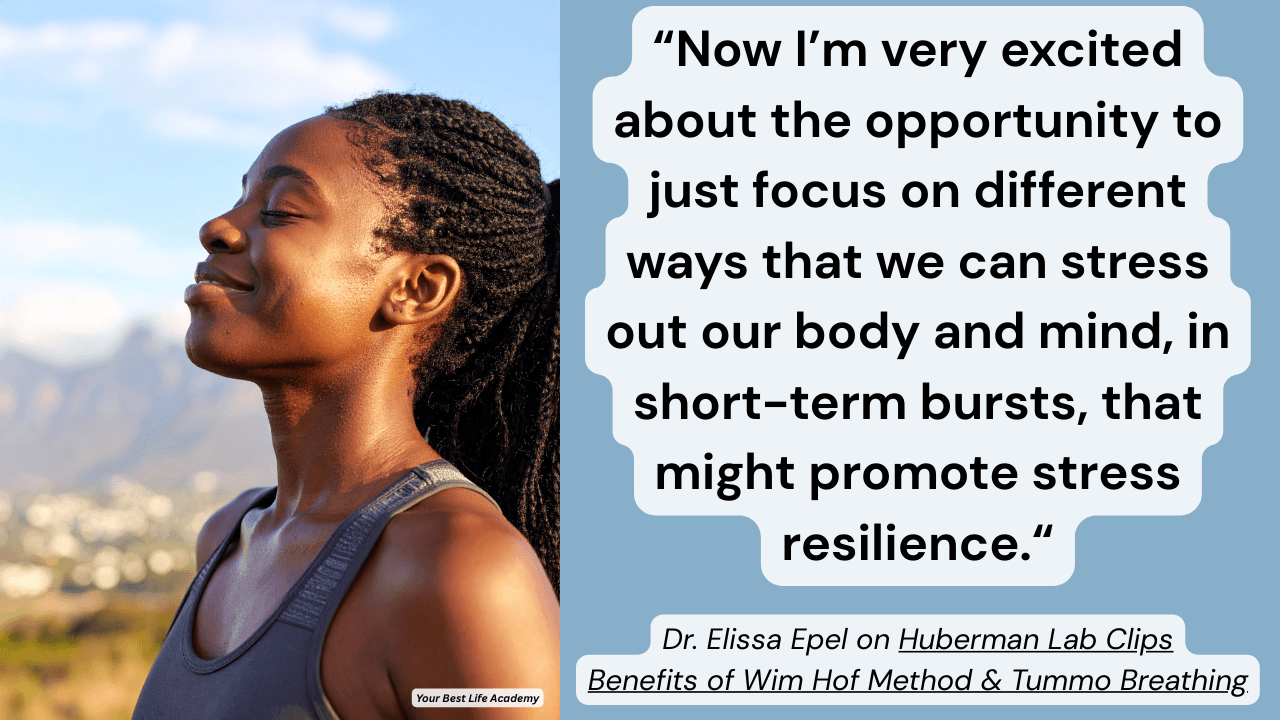
Dr Andrew Huberman had Dr Elissa Epel on a podcast, where they discussed the Wim Hof method of breathing, and the study that Dr Epel is currently doing on this.
Dr Epel discusses stress, and how ‘the body based strategies are concrete, quick, and also [her] favourite strategies.’ (The link to the Huberman Lab Clips video is at the end of this article, as well as other relevant studies.)
How the Wim Hof Breathing Method Works
While the technique may feel unusual at first, the process is quite simple. I find that following the instructions, and just focusing on the voice and what to do, allows you to let go of thinking, and instead to focus on the breath, and feeling in the body.
As mentioned earlier, there are 3 steps in a typical session.
1. Deep Breathing
You begin with around 30–40 deep breaths.
Each breath involves:
Inhaling deeply through the nose or mouth
Letting the breath go naturally (without forcing the exhale – although I must admit that I like to experiment, and so sometimes I do a forceful out breath (as per my yogic training))
This style of breathing fills the body with oxygen, and may create a feeling of lightness or tingling. (Sometimes I feel strong tingles, mainly on my hands and forearms, but sometimes across my whole body at various times and points.)
2. Breath Hold
After the final exhale, you hold your breath for as long as feels comfortable. (This can be built up over time, from wherever you start. I think this is a great aspect, as it helps with your lung capacity too. It’s also interesting noting when you find it easy, and could hold for ages, and other times when you struggle to hold it eg. did you take a full breath beforehand? Or are you holding tension which is impacting this?)
During this pause, many people notice:
A sense of stillness
Calm awareness
A quiet mind
3. Recovery Breath
When you feel the urge to breathe again:
Take a deep inhale
Hold it for about 10–15 seconds
This is called the recovery breath. (And if you’d done many years of yoga like me, you may sometimes forget about this, and start the deep breathing portion again, as that is what we’re used to doing. This is a great gauge to determine where my head is at, and whether I’m concentrating on the instructions or not!)
Repeat for Several Rounds
Most people repeat this cycle 3–4 times. (We usually play the 12 minute/3 round cycle 3 times.)
A full session usually takes 10–15 minutes. (3 sessions take around 30 minutes.)
Potential Benefits of the Wim Hof Breathing Method
Many people who practice the method regularly report a range of benefits.
While experiences vary (I’ve been experimenting, and getting lots of different experiences!), there are some commonly reported benefits, including those outlined below.
1. Reduced Stress and Anxiety
Deep breathing helps calm the nervous system, and can reduce feelings of stress and tension.
Following a guided breathing practice focuses your mind on the breath, rather than stressful situations, so you’re living in the present moment, while also bringing fresh oxygen into your body.
I usually feel lighter and more relaxed after a session (as well as more focused), the same as my friends who recommended it.
2. Increased Energy
The breathing pattern increases oxygen levels in the body, which may help people feel more awake and energised. This can be especially helpful when you feel sluggish, or mentally drained.
I tend to use full breaths (deep belly breaths, as deep as you can breathe in) regularly throughout the day, so I don’t notice this quite as much as the other benefits.
3. Improved Focus and Mental Clarity
Breathwork encourages you to slow down, and focus on the present moment.
I have noticed that after 30 minutes of breathwork, and focusing my mind on my breath, and the present moment, that my mental clarity is stronger. I am more focused on what needs to get done, rather than allowing other random thoughts in. (The fact that I spent 30 minutes on breathing, usually followed by a self-healing reiki practice, means that I’m also ready to ‘get going’, as I’ve already spent quite some time on these practices.)
4. Greater Emotional Balance
When we slow our breathing, our body often moves out of ‘fight or flight’ mode. The yoga teacher training courses and breathwork training that I’ve done all discuss how the breath is beneficial for reducing our stress ‘fight or flight’ responses, and there are now studies around the beneficial effects of deep breathing (see links below).
This can make it easier to respond calmly to challenges, rather than reacting emotionally.
5. A Stronger Mind–Body–Spirit Connection
Breathing practices bring awareness back to the body. This simple act can help people reconnect with themselves, and feel more grounded in daily life.
You start to focus, and consider the breath. And how our bodies breathe without us thinking about it. And how the body and mind can connect via the breath. And in the stillness of the breath, how we can allow space for our spirit to flow. And to just be – and feel.
The Emotional Benefits: Why People Love This Practice
Beyond the physical benefits, many people enjoy the Wim Hof breathing method because of how it makes them feel. My friends and I (as well as others) have felt some great emotional benefits as well, including those mentioned below.
Calm and peaceful
Clear-headed
More confident
More connected to themselves
Present in the moment
And in a world as busy and stressful as it is today, even a few minutes of conscious breathing can feel like a reset button for your mind, body, and soul. Have you ever done something that was so relaxing, and outside of your mind, that you feel like you had a mini-vacation? Sometimes it can feel like a great time-out, and refresh, so you’re more balanced, and ready to continue with your day.
How to Start Practicing the Wim Hof Breathing Method
If you are curious, and would like to try it, start slowly and gently. Some tips to help you make the most of it are below.
Choose a quiet space - Find somewhere comfortable where you will not be disturbed.
Sit or lie down - Most people practice sitting or lying down so they can relax.
Start with short sessions - Even 3 rounds of breathing can be helpful.
Listen to your body - If something feels uncomfortable, stop and return to normal breathing.
Practice regularly - Like most wellness practices, the benefits often grow with consistency.
I like to do my breathing practice in the morning, as it feels good to start my day with clarity and peace.
How Breathwork Can Help You Live Your Best Life
While it’s common to search for complicated solutions to feel better (or turn to food, drink, or drugs), sometimes the most powerful tools are the simplest ones. Breathing exercises are always available to you, and cost nothing.
Practices like the Wim Hof breathing method can be used as part of your wellness toolbox, to assist in a number of ways.
Slow down during stressful moments
reconnect with yourself
build resilience
feel calmer and more centred
When your mind is clear and your body feels balanced, it becomes easier to make choices that align with your values, and the life you want to create.
Sometimes, the first step toward living your Best Life begins with something as simple as one deep breath.
Final Thoughts
Breathwork (or pranayama) has helped has been practiced since ancient times, helping people feel calmer, stronger, and more energised. It is simple, accessible, and can be practiced almost anywhere.
There are a number of videos online to guide you through the process if you would like someone to do the thinking for you, and to keep you on track. The Wim Hof method (which I’m currently practicing almost daily) is available for free via YouTube (it’s also on Spotify).
If you are feeling overwhelmed, stressed, or disconnected from yourself, taking a few minutes to breathe intentionally may be one of the easiest ways to reset your mind and body. (And yes, I've also done the Wim Hof breathing without feeling stressed or tired, and it didn't have the same impact for me.)
Your breath is always with you. Learning how to use it consciously can be a powerful step toward greater balance, clarity, and wellbeing.
🙋 Frequently Asked Questions
1. What is the Wim Hof Breathing Method?
The Wim Hof Breathing Method is a simple breathing practice created by Wim Hof. It involves a pattern of deep breathing, holding the breath, and then taking a recovery breath.
Many people use this technique to calm their mind, boost their energy, reduce stress, and reconnect with their body. (This is when it is the most effective, in my opinion.) The breathing practice usually takes around 10–15 minutes.
2. What are the benefits of the Wim Hof breathing method?
People who practise the method often report benefits such as:
Feeling calmer and less stressed
Increased energy levels
Clearer thinking and better focus
A stronger connection with their body
Greater emotional balance
Even a short breathing session can help you feel more centred and refreshed.
3. Is the Wim Hof breathing method safe?
For most healthy people, the breathing method is generally safe when practised correctly. However, there are a few important guidelines:
Always practise sitting or lying down
Never practise while driving, swimming, or in water
Stop if you feel uncomfortable
If you have medical conditions such as heart issues, breathing disorders, or are pregnant, it is best to speak with a healthcare professional before trying the practice.
4. Why do I feel lightheaded or tingly during the breathing?
It is common to feel lightheaded, warm, or tingly when practising the breathing method. This happens because the breathing pattern changes oxygen and carbon dioxide levels in the body.
These sensations are usually temporary and fade after the breathing round ends.
If the feeling becomes uncomfortable, simply stop the exercise, and return to normal breathing.
5. How long should I practise the Wim Hof breathing method?
Most people practise 3–4 rounds of breathing, which usually takes around 10–15 minutes. (I usually do the 3 rounds, 3 separate times, resulting in 9 breathing sessions in total each session.)
If you are new to the practice, you can start with fewer rounds and slowly increase as you become more comfortable. Always listen to your body, and don’t overdo it.
Consistency matters more than length. Even a short session can be beneficial – to your mind, body, and soul.
6. When is the best time to practise Wim Hof breathing?
Many people enjoy practising the breathing method:
In the morning to feel energised and focused
During stressful moments to calm the mind
Before meditation or journaling to become more present
There is no single ‘perfect’ time. The best time is whenever it helps you reset and reconnect with yourself.
7. What if I find it difficult to hold my breath?
This is very normal, especially when you first begin. There are a few helpful tips that can help with this.
Do not force the breath hold
Relax your body as much as possible
Focus on staying calm rather than counting seconds
Over time, your body may naturally become more comfortable with the process. The goal is not to compete with yourself, but simply to experience the practice.
8. Can beginners learn the Wim Hof breathing method easily?
Yes, absolutely. The breathing method is simple, and many beginners learn it quickly.
The key is to approach it gently, and without pressure. Your body will adapt as you practise.
Many people find it helpful to listen to a guided session the first few times so they can relax and follow the rhythm. Just do what feels comfortable for you, and your own body.
9. How quickly will I notice results?
Some people feel calmer or more energised after their first session.
For others, the benefits build gradually with regular practice.
Like many wellness practices, the key is consistency. Even a few minutes of breathwork several times a week can make a meaningful difference over time.
10. Can the Wim Hof breathing method help with stress and overwhelm?
Many people turn to breathwork because stress and overwhelm can make life feel heavy and exhausting.
Intentional breathing helps slow the nervous system, and bring your attention back to the present moment.
When you pause and breathe deeply, your body often shifts from tension (and the ‘fright and flight’ state), and into a more relaxed state (the ‘rest and relax’ state). This can help you think more clearly, respond calmly to challenges, and feel more balanced in everyday life.
📚 Additional Resources
If you're feeling a little overwhelmed or stressed, we have some free resources which can help. Our Stress Release 7-Day Challenge helps you reduce stress over 7 days - and why not try it with a friend, so you can keep each other on track? Or if you're curious about meditation, or would like to jump-start your way back into it, our Meditation for Beginners 7-Day Challenge has a few different meditation options to try out.
Want more practical ideas and thought-provoking content on a regular basis? Don’t miss out on all the hints & tips that you can implement over time! Sign up for weekly input to help you uplift your life – one week at a time!
We have also created stand-alone pages in the 7 life segments with all blogs, freebies, and paid products grouped together, so you can easily find and review items of interest to you. Click on the links below to find the areas of most interest to you!
Life Purpose & Best Life - Health & Wellness - Relationships - Abundance - Personal Growth - Peace of Mind - Spirituality & Energy.
📖 References/Further Reading
https://pmc.ncbi.nlm.nih.gov/articles/PMC7336946/
https://www.betterhealth.vic.gov.au/health/healthyliving/breathing-to-reduce-stress
https://pmc.ncbi.nlm.nih.gov/articles/PMC5455070/
https://www.youtube.com/watch?v=845b4xdl_QQ Benefits of Wim Hof Method & Tummo Breathing | Dr. Elissa Epel & Dr. Andrew Huberman
https://www.wimhofmethod.com/science
https://www.youtube.com/watch?v=tybOi4hjZFQ (Wim Hof breathing video on YouTube)
📝 Disclaimer
This article shares general information about the Wim Hof Breathing Method, developed by Wim Hof. It is provided for educational and informational purposes only and is not medical advice.
Breathing practices can affect people in different ways. Always listen to your body and practise gently. If you feel dizzy, uncomfortable, or unwell at any time, stop the exercise and return to normal breathing.
The Wim Hof breathing method should always be practised in a safe place while sitting or lying down. It should never be practised while driving, swimming, in water, or in any situation where losing consciousness could be dangerous.
If you are pregnant, have heart or lung conditions, epilepsy, fainting issues, or any other medical concerns, please speak with a qualified healthcare professional before trying this breathing practice.
By choosing to try this technique, you accept full responsibility for your own health and wellbeing. If you have any concerns about your health, please seek advice from a medical professional.
Your Best Life Newsletter
Your Weekly Dose of Inspiration to Live Your Best Life!
✔️ Get practical tips to feel happier, healthier, and more fulfilled.
✔️ Discover easy ways to bring more joy and purpose into your life.
✔️ Be the first to know about new blogs, free resources, and special offers.
💌 Join our supportive community today — it's free!
© 2025 Your Best Life Academy